
Stay Sharp to Nail the Right Sacroiliac Joint Treatment Code
PM specialist could perform several services to treat these injuries. A common complaint by patients at many pain management (PM) clinics is issues surrounding the sacroiliac (SI) joint. The SI joint connects the sacrum to the iliac bones at the base of the spine (pelvis) on both sides. It is a strong, small, and stable joint that supports the upper body’s weight, acting as a shock absorber. SI joint issues are a common cause of lower back, hip, and buttock pain, which the PM specialist will treat with certain procedures. Read on for a rundown of the services your PM specialist might provide for patients with SI problems. Know SI Joint Procedures Conservative options include diagnostic/therapeutic SI joint injections and radiofrequency ablation (RFA). Prior to performing the following procedures, the provider must establish care in the clinical sense via an evaluation and management (E/M) service, which you’ll report with a code from the 99202 (Office or other outpatient visit for the evaluation and management of a new patient, which requires a medically appropriate history and/or examination and straightforward medical decision making. When using total time on the date of the encounter for code selection, 15 minutes must be met or exceeded.) through 99215 (Office or other outpatient visit for the evaluation and management of an established patient, which requires a medically appropriate history and/or examination and high level of medical decision making. When using total time on the date of the encounter for code selection, 40 minutes must be met or exceeded.) set. The provider must assess the chief complaint, perform a physical examination, and determine the best treatment plan based on multiple factors, including the severity of the pain, the patient's age, and the patient's activity level. For minimally invasive treatments and procedures, an injection is often the best approach. Here’s a look at the SI injection codes that might reflect your PM specialist’s SI joint services: It is important to note that most local coverage determinations (LCDs) authored by the Centers for Medicare & Medicaid Services (CMS) will have a frequency of no more than one to two a year for these procedures. Be certain you review this information and all the relevant LCDs for your region before proceeding. Make Sure Dx Codes Corroborate SI Joint Condition Key ICD-10-CM codes for SI joint conditions distinguish between inflammation, dysfunction, and injury. Common codes include M46.1 (Sacroiliitis, not elsewhere classified) for imaged inflammation, M53.3 (Sacrococcygeal disorders, not elsewhere classified) for chronic dysfunction, and S33.6.- (Sprain of sacroiliac joint) for acute trauma. Some other common SI joint injury ICD-10-CM codes include M43.28 (Fusion of spine, sacral and sacrococcygeal region), M53.88 (Other specified dorsopathies, sacral and sacrococcygeal region), M99.05 (Segmental and somatic dysfunction of pelvic region), and S33.2.- (Dislocation of sacroiliac and sacrococcygeal joint). Note: This is not an exhaustive list of ICD-10-CM codes to link to SI joint procedures, nor is a patient with one of the above diagnoses automatically qualified for the SI joint treatments discussed in this article. Always code to the notes and query the physician if you have any questions about SI joint procedure or ICD-10-CM coding. Check Out This Clinical Example A 55-year-old patient presents with chronic, localized pain over the left posterior superior iliac spine (PSIS) area, which is aggravated by walking and transitioning from sitting to standing. Physical examination shows at least three positive, provocative maneuvers for SI joint pain (FABER, Gaenslen’s, thigh thrust tests). The PM specialist decides to perform an SI joint injection, to which the patient consents. Notes indicate that the E/M service leading to the injection included low-complexity medical decision making by the PM specialist. The patient is placed in a prone position. Under fluoroscopic guidance, the PM specialist inserts a spinal needle into the left SI joint. The provider injects contrast dye (arthrography) to confirm intra-articular position, then injects a mixture of 1 mL of lidocaine and 20 mg of Kenalog into the SI joint for both diagnostic confirmation and therapeutic pain relief. The PM specialist counsels the patient on the aftereffects of the procedure and refers them to an orthopedic specialist for further workup. The provider instructs the patient to contact the clinic if anything outside of the typical results occurs. The patient is to return in six weeks or sooner for reevaluation based on the referral. Documentation: The report notes pre- and post-procedure pain scores, confirms the needle tip location with fluoroscopy, and records the specific joint injected. For this encounter, you would report: Note: You would not code separately for the lidocaine supply because it is included in the work units for 27096. Jessica Sullivan, CPC, COBGC, COSC, Consultant,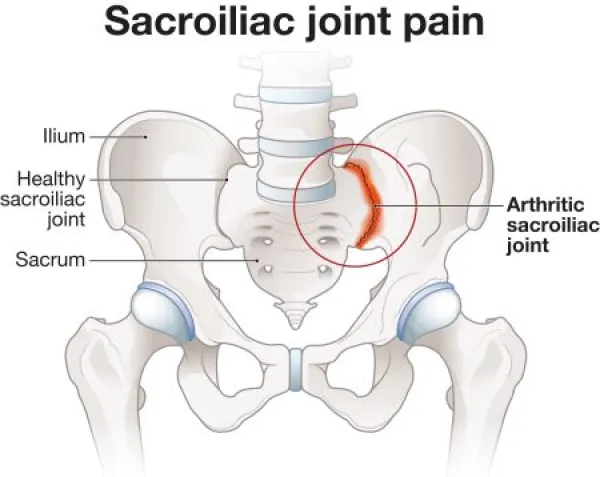
Pinnacle Enterprise Consulting Services (PERCS)
