
Pin Down the Retinitis Pigmentosa Diagnosis
Distinguish the retinal disorder, associated syndromes, and visual impairment to tell the complete coding story. Accurate retinitis pigmentosa (RP) coding requires identifying the specific retinal dystrophy, recognizing confirmed syndromic presentations, and distinguishing active disease from family history or genetic susceptibility. Additional visual impairment codes require documented severity and laterality. Follow the applicable sequencing instructions and connect each diagnosis to the services provided to support a complete, clinically meaningful record. RP presents coding challenges that extend beyond selecting a retinal diagnosis. The patient may have an isolated inherited eye condition, a syndrome affecting multiple organ systems, or visual impairment requiring additional services. Each circumstance contributes to the coding picture, but the documentation must establish which conditions are present. Understand the Retinal Diagnosis RP describes a group of inherited retinal disorders involving progressive photoreceptor degeneration. Patients commonly have difficulty seeing at night and loss of peripheral vision. The clinical course varies, and an RP diagnosis does not automatically establish low vision or blindness. The ICD-10-CM code book classifies hereditary retinal dystrophies under H35.5- (Hereditary retinal dystrophy). This category requires a more specific code for reporting, such as one of the following: The Tabular List includes RP under H35.52. Stargardt’s disease appears under H35.53, while vitelliform retinal dystrophy appears under H35.54. These conditions belong to the same broader category but should not be treated as interchangeable diagnoses. Example: The provider documents RP in both eyes. Report H35.52 rather than H35.50. Code H35.52 does not include laterality, so the same code applies whether one or both eyes are involved. The medical record should still identify the affected eyes. Coding tip: Select the code supported by the provider’s assessment. Retinal pigmentation, a family history, or a genetic result alone does not authorize the coder to diagnose RP. Clarify conflicting or incomplete documentation before assigning a more specific diagnosis. Recognize Syndromic Presentations RP may be one manifestation of a broader disorder. Identifying an established syndrome helps explain referrals and care beyond the retina. Usher syndrome involves retinal degeneration and sensorineural hearing loss; some types also affect balance. The 2027 ICD-10-CM code book includes these reportable codes: Subcategory Q99.81- (Usher syndrome) instructs coders to use additional codes identifying auditory and visual manifestations. When RP is documented as a manifestation, H35.52 supplies that retinal detail. Select the Usher syndrome type from the established diagnosis rather than inferring it from symptoms. Bardet-Biedl syndrome, coded to Q87.83 (Bardet-Biedl syndrome), can include retinal dystrophy, kidney abnormalities, obesity, and polydactyly. The retinal diagnosis may be cone-rod dystrophy rather than RP. Follow the provider’s terminology and select the appropriate retinal code. Category Q87.- (Other specified congenital malformation syndromes affecting multiple systems) directs the use of additional codes for associated manifestations. In outpatient coding, a suspected syndrome remains unconfirmed. Report the conditions established at the encounter rather than coding a possible syndrome as definitive. Separate Family History From Genetic Status A relative’s diagnosis does not establish disease in the patient. Code Z83.518 (Family history of other specified eye disorder) may describe a relevant family history of RP. However, you shouldn’t use this code to replace an established retinal diagnosis or to imply that an unaffected patient has RP. Code Z15.89 (Genetic susceptibility to other disease) may apply when the provider documents a genetic predisposition. A positive test requires interpretation: susceptibility, carrier status, and an established disorder are different findings. Do not assign susceptibility solely from a relative’s test result or a variant of uncertain significance. The guidelines generally place genetic-susceptibility codes after the condition or encounter diagnosis. When genetic counseling is associated with procreative management, report Z31.5 (Encounter for procreative genetic counseling) first, followed by applicable susceptibility and family history codes. Example: An unaffected child receives an evaluation because a parent has RP. Do not report H35.52 solely because screening is planned. Code the documented reason for the encounter and any findings established during the evaluation. Capture Documented Visual Impairment The retinal diagnosis describes the disease. An H54.- (Blindness and low vision) code adds information about established blindness or low vision. The category includes these more specific subcategories: Select the complete code reflecting the documented severity and right- and left-eye combination. Visual impairment categories 1 and 2 represent low vision; categories 3 through 5 represent blindness. Documentation should include best-corrected visual acuity, relevant field findings, and the provider’s impairment assessment. A complaint of night blindness or an uninterpreted field result does not establish a specific H54.- severity category. When bilateral blindness or low vision is documented without a category, the 2027 ICD-10-CM guideline Section I.C.7.b directs you to assign H54.3 (Unqualified visual loss, both eyes). For one eye without a category, use H54.6- (Unqualified visual loss, one eye). Report H54.7 (Unspecified visual loss) when the affected eye or eyes are not identified. Seek clarification when you can obtain additional details. Report visual impairment when it is documented and relevant to the encounter, including low-vision rehabilitation or counseling about functional limitations. A patient returning for RP monitoring may not have a documented impairment diagnosis. In that situation, report the established retinal condition without adding an unsupported H54.- code. When the assessment identifies impairment but omits the severity or affected eye, a documentation query can help resolve the missing information. Follow the Sequencing Instructions Sequencing depends on the reason for the encounter and applicable Tabular List instructions. For nonsyndromic RP monitoring, H35.52 ordinarily serves as the first-listed diagnosis. A confirmed syndrome with a Use additional code instruction precedes its associated manifestation. Code H54.- separately instructs you to code first any associated underlying cause of the patient’s blindness. Example: The provider documents Usher syndrome type 2, associated RP, and bilateral low vision with specified impairment categories. In this example, you’ll sequence Q99.812 before H35.52 and report the appropriate H54.- code after the underlying condition. Make sure to include the documented auditory manifestation as directed. The chart must support each reported diagnosis. Connect Documentation to the Services A specific diagnosis helps explain patient care, but it does not independently establish coverage or authorize a testing schedule. Repeat visual fields or imaging should have a documented clinical purpose consistent with the patient’s condition and applicable payer requirements. Before submitting the claim, confirm that the record identifies: Conclusion Coding RP accurately requires more than finding a single diagnosis code. Use the most specific documented retinal diagnosis, report confirmed syndromes and their manifestations as instructed, and add visual impairment only when the record supports it. Avoid treating family history as active disease or assuming that RP establishes blindness. Clear documentation and correct sequencing help explain the patient’s condition, functional limitations, and need for ongoing care. Rebecca Greenlaw, CPC, CPCO, COPC,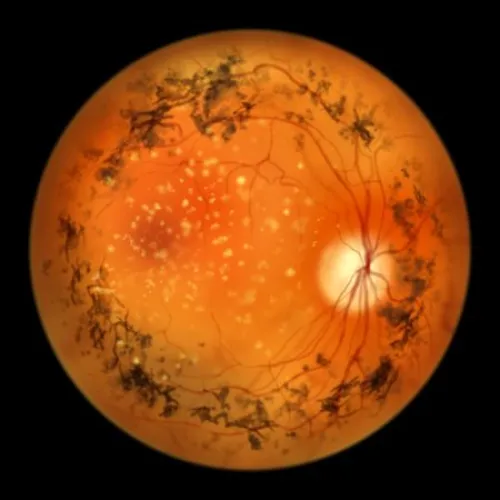
Coding and Reimbursement Consultant, Corcoran Consulting Group
