Check Your Depth of Knowledge on Shaving Epidermal or Dermal Lesions
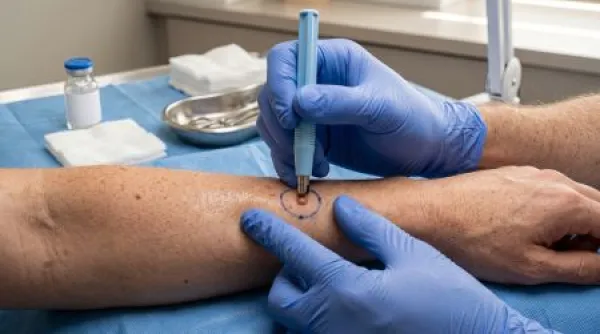
The answer may depend on the depth of the lesion itself. Shaving an epidermal or dermal lesion can provide relief when a growth causes discomfort or bleeding, so emergency department (ED) physicians may perform this procedure when a patient presents with a symptomatic lesion that warrants removal. Accurate coding requires the physician to document the removal technique, the lesion’s location and diameter, and the medical necessity for the service. Coders must also distinguish lesion shaving from a skin biopsy or full-thickness excision. For example, when a physician removes multiple lesions during one encounter, coders must report each separately rather than combine the measurements. Understanding these distinctions helps coders select the correct CPT® codes for dermal lesion shaving. Understand What Qualifies as Lesion Shaving CPT® code range 11300-11313 (Shaving of epidermal or dermal lesion …) describes the shaving of epidermal or dermal lesions without full-thickness dermal excision. The procedure may include local anesthesia and chemical or electrocautery to control bleeding, and the wound must not require suture closure. These codes apply to lesions that extend into the epidermis or dermis but do not require removal through the full thickness of the dermis. Keep in mind that the coding distinction depends on the depth and technique of removal, regardless of the lesion’s appearance or diagnosis. Coders should also distinguish therapeutic shaving from a tangential skin biopsy. When the physician removes tissue primarily to establish a diagnosis, the appropriate biopsy code may apply. When the physician shaves a lesion for removal, the shaving code applies even if the physician submits the specimen for pathological examination. You must not report a separate skin biopsy code for obtaining tissue from the same lesion during the shaving procedure. Select the Code by Location and Diameter The CPT® code set groups lesions by anatomical location and diameter, as you can see in the following chart: CPT® code range Anatomical location Diameter 11300-11303 Trunk, arms or legs 0.5 cm or less; 0.6-1.0 cm; 1.1-2.0 cm; over 2.0 cm 11305-11308 Scalp, neck, hands, feet or genitalia 0.5 cm or less; 0.6-1.0 cm; 1.1-2.0 cm; over 2.0 cm 11310-11313 Face, ears, eyelids, nose, lips or mucous membranes 0.5 cm or less; 0.6-1.0 cm; 1.1-2.0 cm; over 2.0 cm For instance, if a physician shaves a 0.4 cm lesion from a patient’s forearm, the appropriate code is 11300 (Shaving of epidermal or dermal lesion, single lesion, trunk, arms or legs; lesion diameter 0.5 cm or less), while a 0.8 cm lesion on the same arm would require 11301 (… lesion diameter 0.6 to 1.0 cm) and a 1.5-cm lesion on the face would require 11312 (… lesion diameter 1.1 to 2.0 cm). Unlike full-thickness excision coding, shave removal coding does not require adding surgical margins to the lesion measurement. Code Each Lesion Separately The descriptors for codes 11300-11313 specify a single lesion. Therefore, when a physician shaves multiple distinct lesions during the same encounter, you should report the appropriate code for each lesion. Also, you must not add the diameters of multiple lesions together, even when the physician removes them from the same anatomical region. For example, if a physician shaves two separate lesions measuring 0.4 cm and 0.8 cm from a patient's chest, you must report 11300 and 11301, respectively. Do not combine the measurements and report one code for a 1.2 cm lesion. Note this exception: If a physician removes multiple areas of tissue as part of one lesion-removal procedure, report the code that describes the procedure actually performed rather than treating every piece of tissue as a separate lesion. Apply Modifiers for Multiple Shavings Modifiers can distinguish multiple lesion removals performed during the same session. Depending on the circumstances and the applicable claim edits, modifier 59 (Distinct procedural service) or modifier XS (Separate structure) may identify a separate lesion or anatomical site. Modifier XS is a more specific option when the procedures involve separate structures. For example, if a physician shaves two distinct lesions from the chest and both removals map to the same CPT® code, report modifier 59 or XS on the additional line to indicate a distinct service. However, remember that not all payers recognize X modifiers, so be sure to check payer policies before appending modifier XS to a specific lesion removal procedure code when reporting multiple lesion removal codes. Report a Separate ED E/M Service When Appropriate An ED physician may perform lesion shaving during an encounter that also requires a separately identifiable evaluation and management (E/M) service. The physician must perform and document medically necessary evaluation or management work that goes beyond the usual work associated with the procedure. Modifier 25 (Significant, separately identifiable evaluation and management service by the same physician or other qualified health care professional on the same day of the procedure or other service) identifies a significant, separately identifiable E/M service performed by the same physician on the same day as a procedure. The patient’s decision to undergo a procedure does not automatically justify a separate E/M code. Likewise, the fact that a patient receives care in the ED does not establish that the physician performed a separately reportable E/M service. Consider a patient who arrives in the ED with a persistently bleeding, irritated lesion on the forearm. The physician evaluates the bleeding, reviews relevant medical history and medications, assesses the lesion, and determines whether immediate removal is appropriate. After completing the evaluation, the physician shaves the lesion. If the documented E/M service exceeds the work inherent in the shaving procedure, you should report the appropriate ED E/M code with modifier 25, along with the shaving code. The specific E/M level must reflect the documented medical decision making (MDM) or other applicable ED E/M coding requirements; you should not select a level solely because the physician performed a procedure. Michelle Falci, BA, M Falci Communications LLC